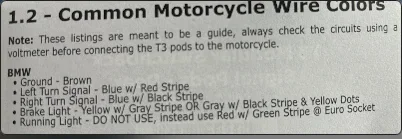
I swear I'm not trying to be a smartass here, but I suggest you check the wires yourself. It is an easy process, and you're guaranteed correct results.
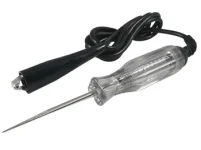
All you need is a 12V test probe, available at any auto-parts store:
View attachment 3852
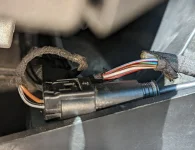
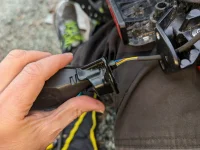
You attach the alligator click to some big metal part on the bike, and stick the pointy part in the back end of some connector, typically near the lights themselves. Almost all connectors have exposed metal, recessed in the back, for each wire, accessible with a thin point like that. Then, flip switches, turn signals, etc., and when juice is flowing in a given wire the probe will light up.
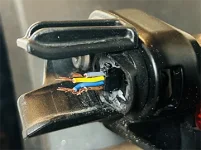
Really, I've done this for assorted bikes over the last 25 years, with no need of wiring diagrams, when I've added brake flashers, extra lights in topcases, extra turn signals, and so forth. And typically the ground wire will be brown or black.
I swear I'm not trying to be a smartass here, but I suggest you check the wires yourself. It is an easy process, and you're guaranteed correct results.
All you need is a 12V test probe, available at any auto-parts store:
View attachment 3852
You attach the alligator click to some big metal part on the bike, and stick the pointy part in the back end of some connector, typically near the lights themselves. Almost all connectors have exposed metal, recessed in the back, for each wire, accessible with a thin point like that. Then, flip switches, turn signals, etc., and when juice is flowing in a given wire the probe will light up.
Really, I've done this for assorted bikes over the last 25 years, with no need of wiring diagrams, when I've added brake flashers, extra lights in topcases, extra turn signals, and so forth. And typically the ground wire will be brown or black.
The simplest solution tends to be the most effective